 Skip to content
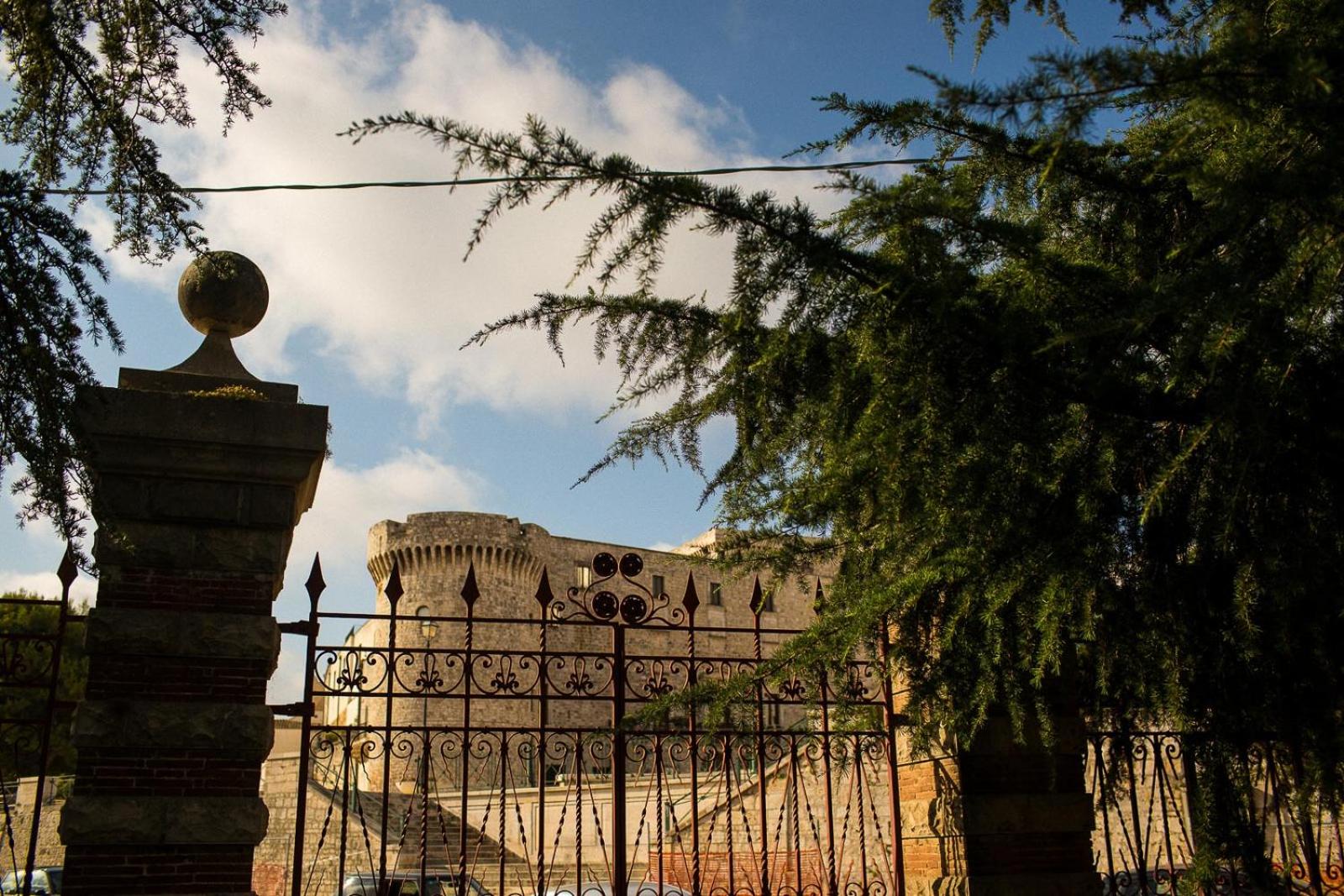
Conversano is the first discovery just beyond the gates of Masseria Lecerase. Elegant, authentic, and easy to explore on foot, it preserves the true rhythm of Puglia, where history, beauty, and everyday life come together.
What to see
The Historic Center
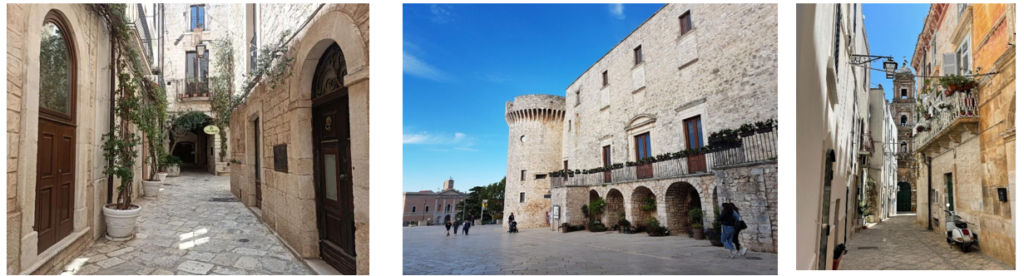
The heart of Conversano is a charming maze of cobbled streets, stone arches, historic buildings, and small squares where time seems to slow down. A leisurely walk reveals panoramic views, artisan workshops, traditional restaurants, and hidden corners gathered around Piazza Castello.
Acquaviva d’Aragona Castle
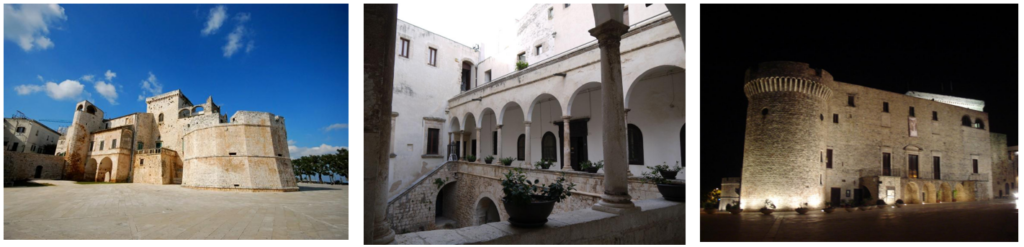
A symbol of the city, Acquaviva d’Aragona Castle dominates the highest point of the historic center. Originally built as a Norman fortress in the 11th century, it was transformed over the centuries into an elegant noble residence of the Acquaviva d’Aragona family. Today, the castle houses the Paolo Finoglio Municipal Art Gallery, home to one of the most important examples of Italian Baroque painting: the cycle of canvases dedicated to Torquato Tasso’s Jerusalem Delivered.
Paolo Finoglio Municipal Art Gallery
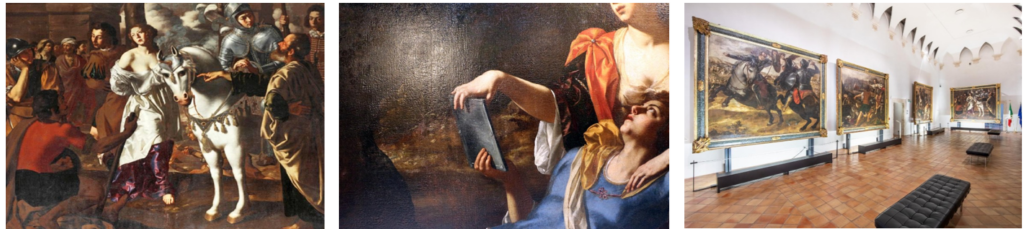
Located inside the historic rooms of Acquaviva d’Aragona Castle, the gallery preserves one of the most important 17th-century painting cycles in Puglia. Its masterpiece is the series of ten large canvases dedicated to Jerusalem Delivered, painted by Paolo Finoglio around 1640. Through dramatic scenes of love, duels, and battles, the works express the theatrical intensity of the Baroque, featuring legendary figures such as Rinaldo, Armida, Tancredi, and Clorinda.
Cathedral Basilica of Santa Maria Assunta
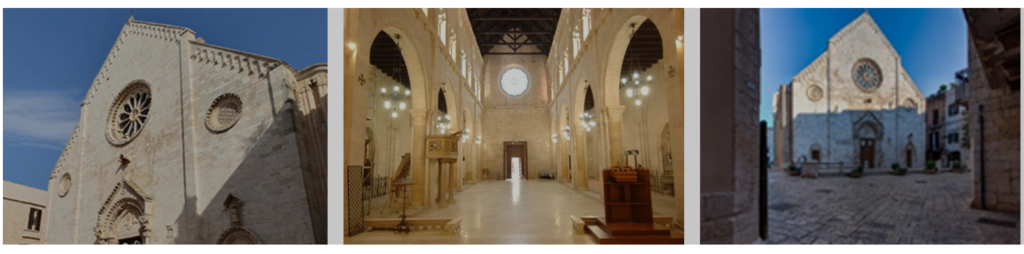
Just a few steps from the castle stands the Cathedral Basilica, a splendid example of Apulian Romanesque architecture enriched with Baroque elements. Its simple and elegant façade opens onto an interior filled with artworks, chapels, and precious decorations. Dedicated to the Assumption of the Virgin Mary and Saint Flavian, patron saint of Conversano, the cathedral remains one of the city’s most important spiritual landmarks.
Church and Monastery of San Benedetto
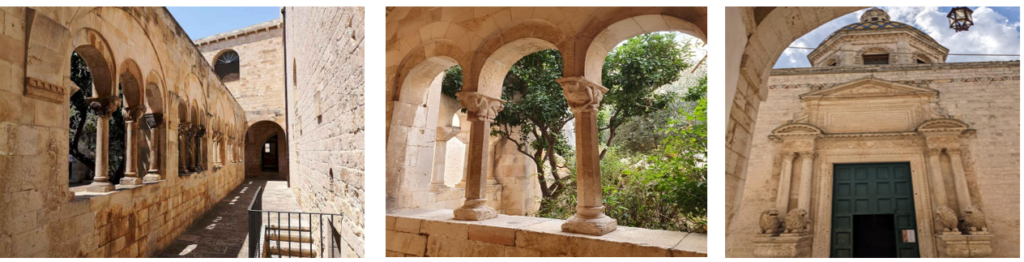
One of Conversano’s most evocative places, the Monastery of San Benedetto features a beautiful medieval cloister and a Romanesque church decorated with refined artistic details. For centuries, it was ruled by the famous mitred abbesses, women who held both religious and civil authority, giving the monastery a unique historical importance and earning it the title Monstrum Apuliae. The complex also houses the Civic Archaeological Museum, which traces the history of the area from prehistoric times to the Roman era.
Church of Saints Cosma and Damiano
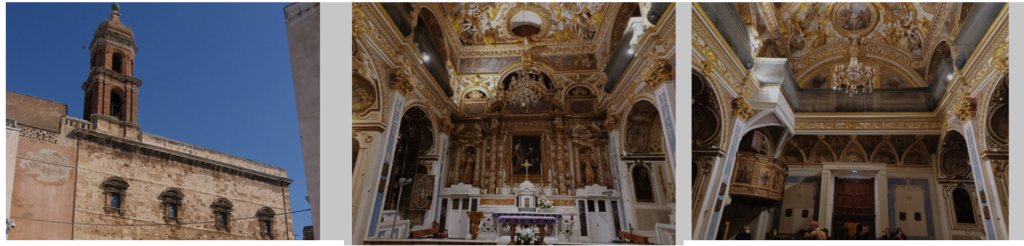
A place deeply connected to local devotion, the Church of Saints Cosma and Damiano was built between the 16th and 17th centuries. Its elegant Baroque interior features rich stucco decorations, decorated altars, and artworks dedicated to the patron saints of medicine. Today, it remains an important religious and cultural landmark, especially during the celebrations dedicated to Saints Cosma and Damiano.
Archaeological Remains of Torre Castiglione
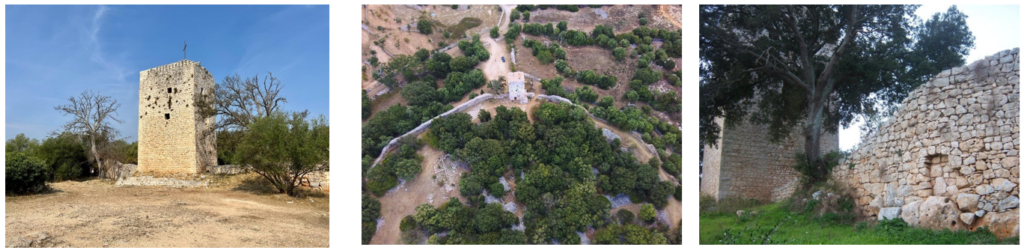
A few kilometers from Conversano, surrounded by the Apulian countryside, Torre Castiglione reveals a history spanning from the Peucetian era to the Middle Ages. The site preserves the remains of an ancient fortified settlement, including walls, dwellings, roads, and the medieval Church of the Annunziata with its funerary chambers. At its center stands a watchtower dating back to the 15th–16th centuries.
Marchione Castle
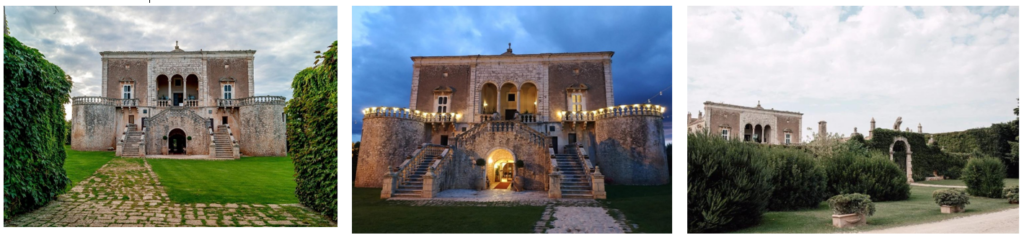
Surrounded by the greenery of the Conversano countryside, Marchione Castle was once a hunting residence of the Acquaviva Counts. Set within a large centuries-old park, it offers a peaceful excursion for guests wishing to discover the landscapes surrounding the historic town.
Church and Convent of Santa Maria dell’Isola
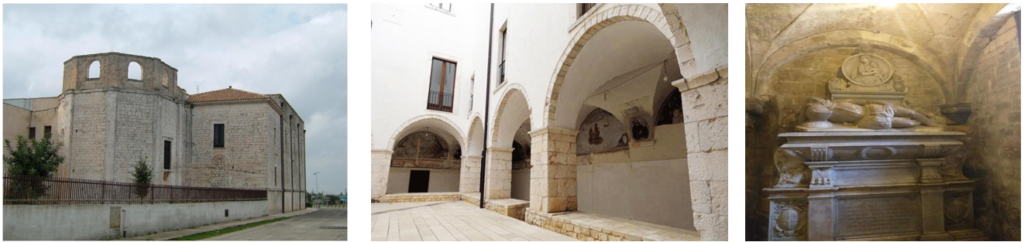
In the Apulian countryside, the Santa Maria dell’Isola complex was built in the 15th century over an ancient natural crypt and entrusted to the Friars Minor Observant. The church, characterized by late-Gothic architecture and elegant pointed vaults, preserves the precious cenotaph of Giulio Antonio Acquaviva d’Aragona, created in polychrome stone in memory of the count who died during the Battle of Otranto in 1481. The convent still preserves ancient rooms and cloisters, offering a fascinating glimpse into the spiritual history of the area.